
Navalny’s Flight Into Russia
Alexei Navalny is a case study in domestic dissent.
In August 2020, Alexei Navalny, Russia’s most prominent opposition figure, was nearly killed in a suspected poisoning attack. He fell ill during a domestic flight within Russia and was eventually flown to Berlin for treatment, where labs confirmed he had been poisoned with Novichok.
Backed by later investigative journalism, Navalny’s poisoning involved agents of Russia’s FSB, drawing international condemnation.
An upward trend, a long line, a curl, then a swing.
This graph is Russian opposition figure Alexei Navalny’s singing off from his Europe refuge before a final frontal attack on the Russian political establishment in 2021.
Arrival in Moscow
On January 17th 2021, Navalny and his wife boarded Pobeda flight DP 936 in Berlin Brandenburg Airport destined toward Vnukovo Airport, Moscow. His reentry into Russia was advertised via Navalny’s channels and team of supporters, and was extensively reported, and followed real-time across the world.
People tracked his flight nautical mile by nautical mile on FlightRadar’s real-time flight tracking system, and it was by far the most tracked flight at the time.
Russian police took notice, too, because large crowd-control police forces started to gather around Vnukovo Airport, as well as local Russians.
“What was going to happen when he landed“, everyone asked themselves. An arrest was likely, but would crowds amass within the airport, blocking the police operation? If yes, would that lead to police resorting to violence? How motivated were the protestors? Navalny had, after all, just been attempted murdered by poisonous substance.
Then it happened – the flight took an unexpected, sharp turn. It quickly became apparent that this turn was no part of normal the normal approach pattern toward Vnukovo.
Shortly after came the message from airport management, now being shared wildly across social media: Due to technical issues at Vnukovo, flight DP936 had been diverted to the other major Moscow airport, Sheremetyevo.
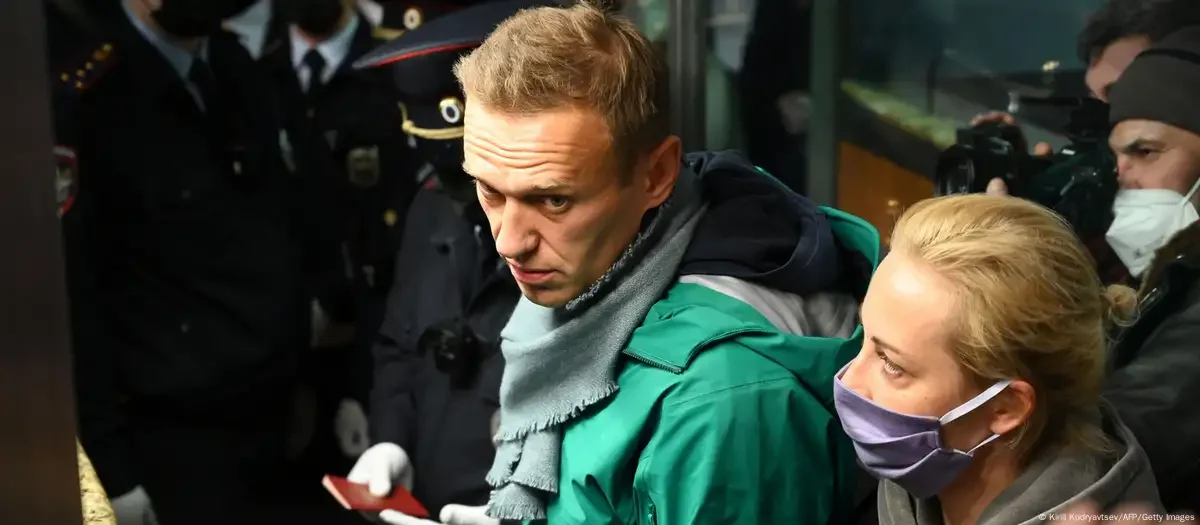
Here, Navalny was taken into custody. He was accused of violating the terms of a suspension sentence by being absent during his medical treatment in Berlin.
In the following days, Russians took to the streets across Russia in the wake of Navalny’s arrest. Human Rights Watch says Russian police detained more than 3,700 on January 23 alone.
Timeline
20 August 2020: Navalny falls violently ill mid-flight from Tomsk to Moscow, and the plane makes an emergency landing in Omsk. An initial suspicion from Navalny’s team directed attention toward a cup of tea that Navalny had in the airport before departure. This suspicion was later largely abandoned.
22 August 2020: He is medically evacuated in a coma to Berlin’s Charité hospital for treatment.
2 September 2020: Germany confirms he was poisoned with the Soviet-era nerve agent Novichok. OPCW-certified labs later corroborate the findings.
Late 2020: Investigative teams Bellingcat and The Insider publish an investigation naming FSB agents allegedly involved. Navalny releases a recorded phone call in which an FSB agent appears to admit poisoning him by contaminating his underwear.
28 December 2020: Russia’s prison service issues a summons for Navalny to return immediately or face imprisonment for violating probation linked to a 2014 suspended sentence.
17 January 2021: After five months in Germany, Navalny boards a Pobeda flight from Berlin, despite warnings he would be arrested. The plane is unexpectedly diverted from Vnukovo to Sheremetyevo airport. Just after landing, he is detained at passport control.