The Potemkin Village – how the expression came about
The Illusion of Prosperity: The Origin of the “Potemkin Village”
The term “Potemkin village” is today shorthand for a deceptive façade means a showy, hollow display meant to hide an underlying reality. It’s used to describe everything from phony economic stats to fake storefronts in authoritarian regimes.
But its origin lies in one of the more theatrical episodes in Russian imperial history: Empress Catherine the Great’s journey to Crimea in 1787.
The Emperor’s Grand Tour
At the time, Russia had recently annexed Crimea after wars with the Ottoman Empire. To solidify her claim and show off Russian might and prosperity, Catherine II embarked on a six-month long journey through “New Russia” (southern Ukraine and Crimea), accompanied by foreign diplomats, courtiers, and military officials.
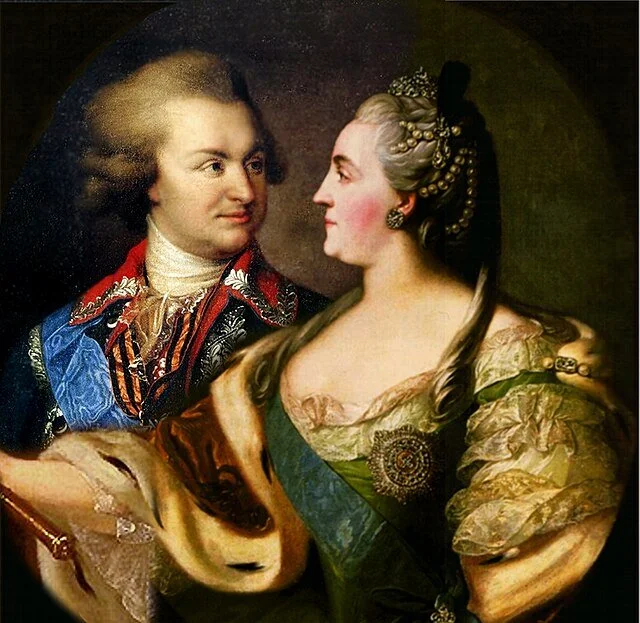
Her favorite and longtime companion Grigory Potemkin – a clever, but flamboyant statesman – was tasked with organizing the spectacle.
The Alleged Deception
Legend has it that Potemkin, eager to impress the Empress and foreign observers, ordered the construction of fake villages along the banks of the Dnieper River. As Catherine’s barge floated downstream, she would see neat rows of smiling peasants, new houses, bustling markets. But all fabricated facades.
Once she passed by, the sets were quickly dismantled and moved further downstream to repeat the trick.
Some stories claim he even populated the roadside with imported livestock and soldiers dressed as happy farmers, all to give the impression that the region was blooming under Russian rule.
❧
Historians today largely agree that the most extreme versions of this tale were exaggerated by foreign commentary, and especially Catherine’s enemies, who found it politically useful to mock Potemkin’s rather silly antics. There were real improvements in the region: fortresses, roads, towns, and some actual settlements. Potemkin did invest heavily in the south.