
The 1999 Apartment Bombings: A Pivotal Moment for President Putin
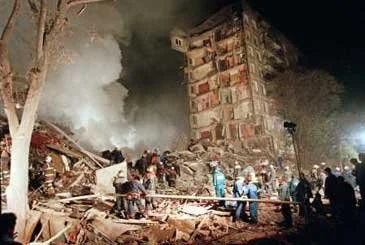
In September 1999, multiple apartment bombings struck Moscow and other Russian cities, killing more than 300 people and injuring hundreds. The attacks occurred over two weeks, targeting residential buildings at night while most residents slept. The bombings spread fear across Russia and played a key role in shaping the country’s political trajectory.
What happened in Moscow: The Official Narrative
The Russian government blamed Chechen separatists for the attacks. This framing coincided with the outbreak of the Second Chechen War, which began shortly afterward. Vladimir Putin, then newly appointed Prime Minister, took a hardline stance, launching a full-scale military operation in Chechnya. His decisive response boosted his popularity and helped pave his path to the presidency in 2000.
Official investigations pointed to Islamist militants linked to Chechnya, with several suspects reportedly tried and convicted in later years. The FSB (Federal Security Service) maintained that the attacks were part of a broader terrorist campaign tied to separatists.
Theories of State Actor Involvement
From the outset, some observers questioned the official version. One of the most cited controversies came from an incident in the city of Ryazan. There, residents discovered sacks in a basement that were initially described by local police as containing explosives. Later, the FSB claimed it was a “training exercise” involving sugar, not explosives.
Critics, including dissidents like Alexander Litvinenko (a former FSB officer who later died in London from polonium poisoning), argued that the bombings had hallmarks of a false-flag operation. Their theory was that elements within the state, or the FSB itself, staged the attacks to justify war in Chechnya and consolidate power around Putin.
Independent investigations have been stopped. Journalists probing the case, like Anna Politkovskaya and others, faced threats or worse. Official archives remain closed, and public discussion of state involvement is heavily restricted within Russia.
A convenient casus belli gave President Putin much needed leverage
The bombings not only devastated communities but also shifted Russian politics. They provided the rationale for a brutal war in Chechnya and helped cement Putin’s image as a strong leader. To this day, the full truth of who planned and executed the attacks remains disputed.
Whether the bombings were purely the work of militants or an operation with state complicity, they marked a turning point: a moment when fear and violence reshaped the country and its future.